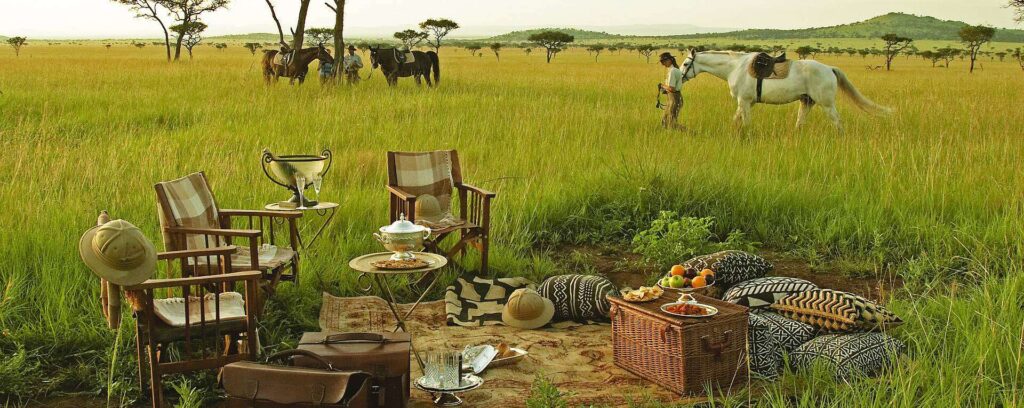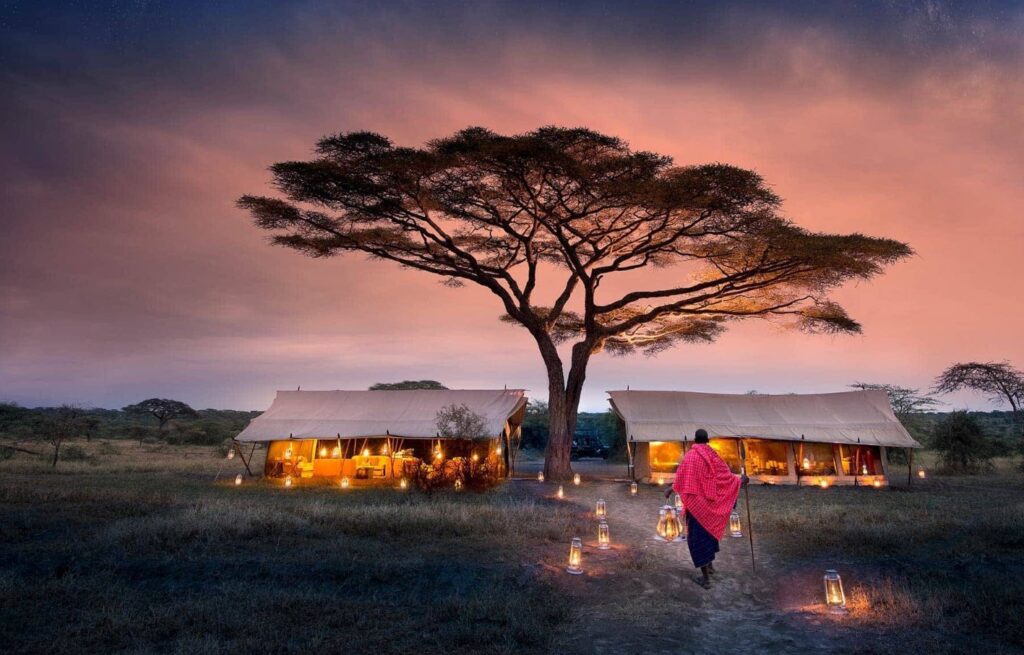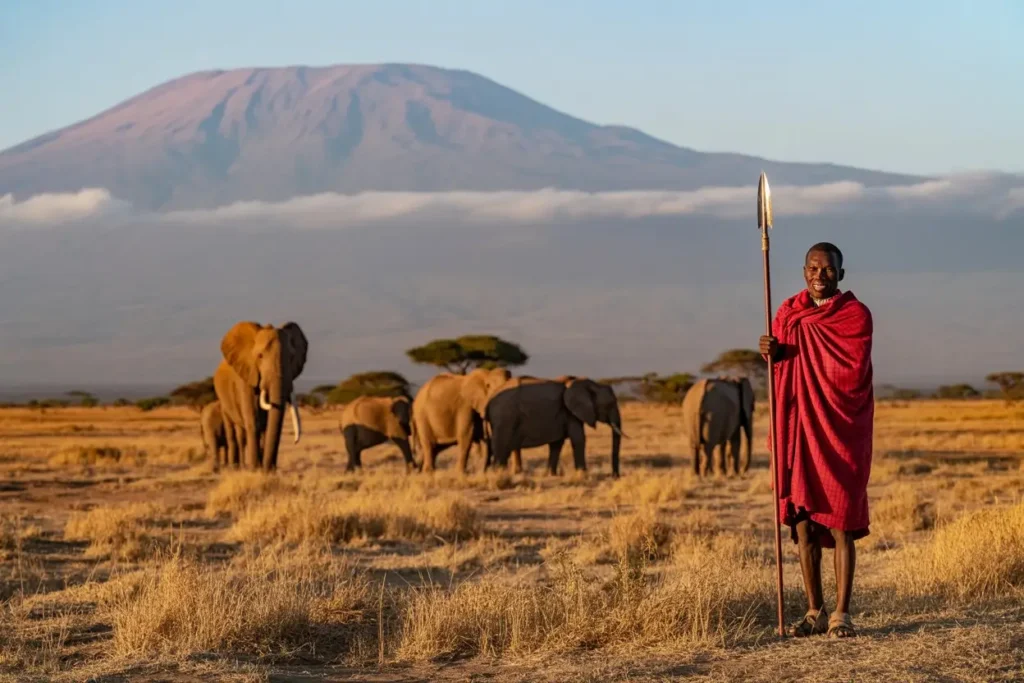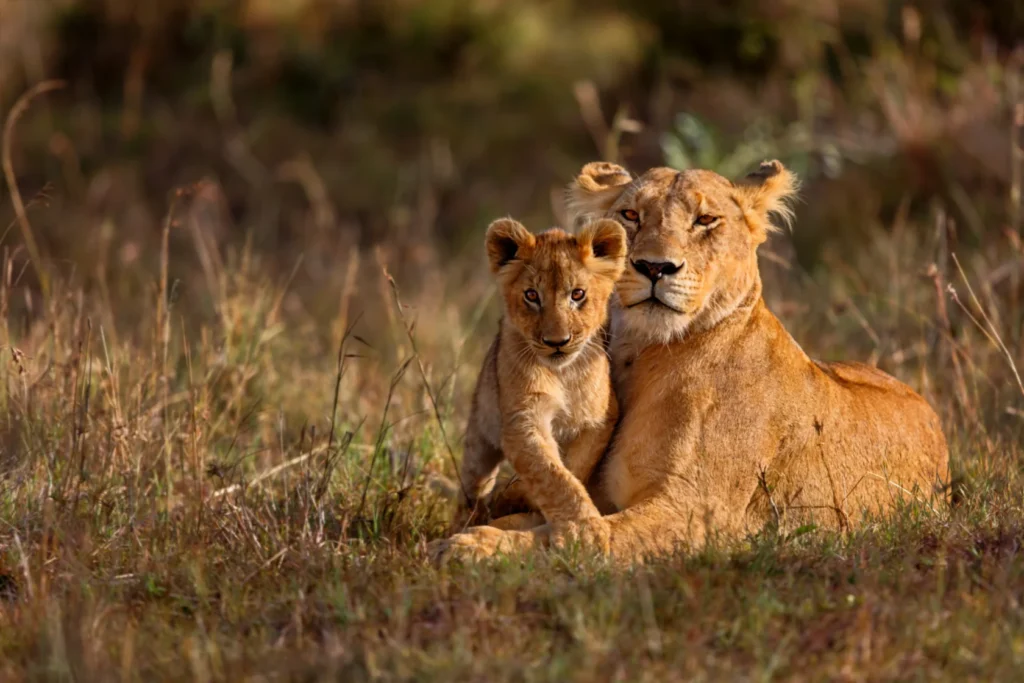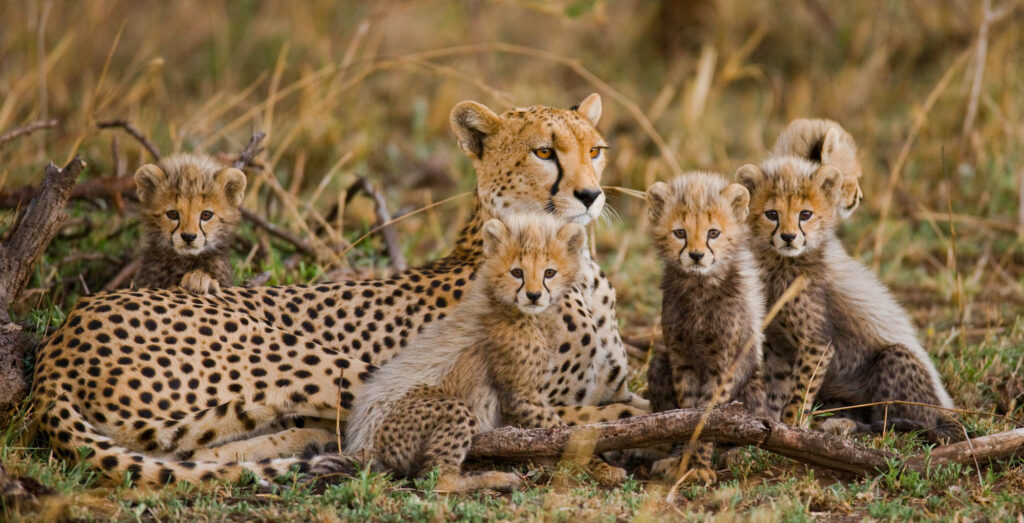
A Tanzania safari gives you the opportunity to witness some of the world’s most extraordinary wildlife in its natural environment. From lions resting beneath acacia trees to elephants crossing the savannah and giraffes silhouetted against the setting sun, there are countless moments worth remembering.
For many travellers, photography becomes an important part of the safari experience.
But capturing great wildlife photographs is not simply about having an expensive camera. Wildlife moves unpredictably, lighting changes quickly, and the best moments can last only a few seconds. Knowing how to anticipate animal behaviour, use your camera effectively, and remain patient can make a much bigger difference than the price of your equipment.
Tanzania National Parks Authority (TANAPA) encourages visitors to photograph wildlife without intruding on animals or disturbing their natural behaviour, while maintaining appropriate distances and following guide instructions.
Whether you are using a professional camera, a mirrorless system, a compact camera, or a smartphone, these expert tips can help you capture better wildlife photographs during your Tanzania safari.
## 1. Learn Your Camera Before the Safari
One of the biggest mistakes photographers make is trying to learn their camera while sitting in front of a lion.
Safari photography can move extremely quickly.
An animal may suddenly stand up, run across the road, look directly toward your vehicle, or interact with another animal. You may have only a few seconds to capture the moment.
Before your trip, become familiar with your camera’s:
* Shutter speed
* Aperture
* ISO
* Autofocus modes
* Focus points
* Continuous shooting mode
* Exposure compensation
* Image stabilization
* Zoom controls
Practise changing these settings without taking your eye away from the viewfinder.
The more familiar you are with your equipment, the more attention you can devote to observing wildlife.
## 2. Use a Telephoto or Zoom Lens
Wild animals should always be photographed from a safe and respectful distance.
A telephoto or zoom lens allows you to fill the frame without getting physically closer to the animal.
A versatile zoom lens can be particularly useful on safari because you may encounter wildlife at very different distances.
A distant lion may require a longer focal length, while a large elephant standing relatively close to your vehicle may require you to zoom out.
If you are travelling with interchangeable lenses, a telephoto lens is one of the most useful pieces of equipment you can bring.
TANAPA also recommends using binoculars and zoom lenses to observe wildlife without disturbing it.
## 3. Shoot During the Best Light
Light can completely transform a wildlife photograph.
The middle of the day often produces strong overhead sunlight and harsh shadows.
Early morning and late afternoon generally provide softer, warmer light that can create more attractive photographs.
These periods are also important for wildlife activity.
TANAPA specifically recommends taking advantage of natural light, particularly during early morning and late afternoon.
This is one reason early morning game drives are so valuable.
The combination of active wildlife and beautiful light can create photographs with much more atmosphere.
## 4. Master Shutter Speed
Wildlife rarely stays still for long.
A lion may suddenly stand.
A zebra may run.
A bird may take flight.
An elephant may begin walking toward your vehicle.
Your shutter speed determines how effectively you can freeze movement.
For relatively still animals, a moderate shutter speed may be sufficient.
For moving wildlife, you generally need a faster shutter speed.
For very fast action, such as birds in flight or running animals, an even faster shutter speed may be necessary.
The exact setting depends on your camera, lens, lighting, and the movement you are photographing.
The important principle is simple:
**The faster the subject moves, the more carefully you need to consider shutter speed.**
## 5. Use Continuous Autofocus
When an animal is moving toward or away from you, single-shot autofocus may not always be the most effective choice.
Many modern cameras offer continuous autofocus modes designed to track moving subjects.
Depending on your camera manufacturer, this may have a different name, such as AF-C or AI Servo.
If your camera has animal or eye-detection autofocus, experiment with it before your safari.
However, do not rely completely on automatic features.
Wildlife can move behind grass, branches, or other animals, causing the camera to focus on the wrong subject.
Understanding how to change focus modes gives you more control when conditions become difficult.
## 6. Don’t Forget Aperture
Aperture controls how much light enters the lens and influences depth of field.
A wider aperture can help separate an animal from a distracting background, creating a softer background that draws attention toward the subject.
This can work particularly well for portraits of lions, elephants, giraffes, and other large animals.
However, extremely shallow depth of field can also make it difficult to keep an entire animal in focus.
If the animal is positioned at an angle, you may need more depth of field.
The goal is not always to use the widest possible aperture.
Choose the setting that best suits the subject and composition.
## 7. Raise ISO When Necessary
Safari photography often takes place during early mornings and late afternoons when light levels are lower.
You may have to increase ISO to maintain an appropriate shutter speed.
A slightly noisy photograph can often be much better than a completely blurred photograph.
Modern cameras can handle higher ISO settings remarkably well, and image-processing software can also reduce noise.
Do not be afraid to increase ISO when the situation requires it.
The priority should be capturing the moment.
## 8. Focus on the Eyes
When photographing animals, the eyes are often the most important part of the image.
A photograph can have excellent composition and beautiful light, but if the animal’s eyes are out of focus, the image may feel less engaging.
Whenever possible, focus on the animal’s eyes.
This is particularly important for close-up portraits.
The eyes help create a sense of connection between the viewer and the animal.
Watch the animal carefully and be ready when it looks in your direction.
A lion staring toward your vehicle can create a much stronger photograph than the same lion looking away.
## 9. Think About Composition
Good wildlife photography is not simply about getting the animal into the frame.
Composition matters.
Before pressing the shutter, consider where the animal is positioned.
Try leaving some space in front of an animal that is looking or moving toward a particular direction.
This can create a sense of movement and make the photograph feel more natural.
You can also experiment with:
* Rule of thirds
* Negative space
* Symmetry
* Reflections
* Foreground elements
* Leading lines
* Environmental portraits
Sometimes the best photograph is not a tight close-up.
Showing the animal within its environment can tell a much stronger story.
## 10. Capture the Environment
A common mistake is trying to photograph only the animal.
But Tanzania’s landscapes are part of the story.
A photograph of a lion is impressive.
A photograph of that lion sitting beneath an acacia tree with the vast Serengeti stretching into the distance can tell a much bigger story.
Try occasionally zooming out.
Include mountains, grasslands, trees, rivers, clouds, or other environmental features.
These photographs help communicate where the animal lives.
They also create a visual record of your safari rather than simply a collection of animal portraits.
## 11. Watch Before You Photograph
One of the most valuable skills in wildlife photography is patience.
Do not immediately start taking hundreds of photographs the moment you see an animal.
Watch it first.
What is it doing?
Where is it looking?
Is it about to stand?
Is another animal approaching?
Is there an interesting background?
Understanding behaviour can help you anticipate the next moment.
Your safari guide can also provide valuable information about what an animal is likely to do.
Sometimes waiting another thirty seconds produces a much better photograph than immediately pressing the shutter.
## 12. Take Advantage of Burst Mode
Wildlife can change position incredibly quickly.
Continuous or burst shooting allows your camera to capture a sequence of images while you hold the shutter button.
This can be useful when photographing:
* Animals running
* Birds taking flight
* Lions interacting
* Elephants playing
* Predators hunting
* Animals jumping
* Interesting facial expressions
However, do not simply hold the shutter continuously for every encounter.
Large numbers of photographs quickly fill your memory cards and make editing much more difficult.
Instead, anticipate the action and shoot when something interesting is happening.
## 13. Photograph Animal Behaviour
The most memorable wildlife photographs often show behaviour rather than simply an animal standing still.
Look for moments such as:
* Lions interacting
* Elephants touching trunks
* Giraffes feeding
* Zebras running
* Hippos yawning
* Birds feeding
* Young animals following their parents
* Predators watching prey
These moments tell stories.
A photograph that communicates behaviour can be much more powerful than a technically perfect portrait.
## 14. Use the Vehicle to Your Advantage
Your safari vehicle provides a stable platform for photography.
If possible, brace your camera and lens against a stable part of the vehicle while avoiding excessive movement.
A beanbag or suitable support can also help stabilize a long lens.
However, always follow your guide’s instructions about where you can position yourself and your equipment.
Do not lean dangerously outside the vehicle or move in ways that could disturb wildlife.
TANAPA’s visitor guidance emphasizes staying in vehicles during game drives unless guides or park rules specifically allow otherwise.
## 15. Keep Your Camera Ready
Wildlife sightings can happen without warning.
Keep your camera accessible rather than buried inside your bag.
Make sure:
* Batteries are charged
* Memory cards have available space
* Lens caps are removed when appropriate
* Camera settings are suitable for current conditions
* Your lens is clean
* Your camera is switched on when you are actively watching wildlife
A few seconds spent searching through your bag can mean missing an unforgettable moment.
## 16. Carry Extra Batteries and Memory Cards
Safari days can be long.
Cold mornings, frequent photography, image stabilization, high-resolution files, and video recording can all consume battery power.
Bring spare batteries and plenty of memory-card capacity.
If your accommodation provides charging facilities, charge your batteries every evening.
It is also wise to back up important photographs whenever possible.
You do not want to lose hundreds of photographs because of a damaged or misplaced memory card.
## 17. Protect Your Equipment From Dust
Safari vehicles often travel on unpaved roads, and dust can become one of the biggest challenges for camera equipment.
Keep your camera protected when you are not actively photographing.
Avoid changing lenses unnecessarily in dusty conditions.
A camera bag or protective cover can help reduce exposure to dust.
If you use interchangeable lenses, consider carrying basic cleaning equipment such as a blower and microfiber cloth.
Do not wipe dust aggressively across the lens or sensor.
## 18. Don’t Ignore Your Smartphone
You do not need a professional camera to create memorable safari photographs.
Modern smartphones can produce impressive images, particularly in good lighting.
Use your phone to capture moments that do not necessarily require a long telephoto lens:
* Landscapes
* Group photographs
* Safari vehicles
* Camp scenes
* Sunsets
* Meals
* Cultural experiences
* Close wildlife encounters where permitted
A smartphone can also be useful for quickly sharing selected photographs with friends and family.
## 19. Photograph Responsibly
Great wildlife photography should never come at the expense of the animal’s wellbeing.
Do not ask a driver to chase an animal simply to get a better photograph.
Do not make loud noises to attract an animal’s attention.
Do not feed wildlife.
Do not attempt to get closer than park regulations allow.
And never encourage behaviour that could place animals, visitors, or guides at risk.
TANAPA’s official guidance emphasizes maintaining safe distances, avoiding disturbance, and following park and guide instructions.
The goal is to capture wildlife behaving naturally.
The best photograph is one that records an authentic moment without changing that moment.
## 20. Understand Photography Rules in Tanzania’s National Parks
If you are photographing purely for personal memories, normal visitor rules apply.
However, commercial photography and filming can have additional requirements.
TANAPA states that commercial photography or filming in national parks may require a permit, and photographic activities are governed by national park regulations and applicable guidelines.
If you are travelling for professional, commercial, advertising, or media purposes, check the applicable requirements before your trip.
Do not assume that rules applying to ordinary holiday photography automatically apply to commercial production.
## 21. Consider a Photographic Safari
If photography is the main reason for your Tanzania trip, consider booking a safari specifically designed around photography.
Photographic safaris can provide more time for wildlife observation and may be structured around the best lighting conditions.
Some destinations also offer specialized photographic experiences.
TANAPA lists photographic safaris among its tourism activities, while destinations such as Nyerere National Park specifically promote game drives and photographic safaris.
This can be particularly valuable if your goal is to return home with a serious collection of wildlife images rather than simply taking holiday snapshots.
## 22. Use Natural Light Creatively
Do not always try to photograph an animal with the sun directly behind you.
Backlighting can create beautiful silhouettes and glowing edges around an animal’s fur.
Side lighting can emphasize texture.
Soft morning light can create gentle shadows.
Late-afternoon light can add warmth to the landscape.
Instead of treating difficult light as a problem, experiment with it.
Some of the most memorable safari photographs can come from unusual lighting conditions.
## 23. Don’t Forget the Small Things
Everyone wants photographs of lions and elephants.
But Tanzania’s wildlife is much more diverse than the Big Five.
Look for birds, reptiles, insects, colourful plants, unusual tracks, and smaller mammals.
A safari is an entire ecosystem.
Sometimes a small subject can make a surprisingly beautiful photograph.
Birds in particular can provide excellent opportunities for practising your tracking and focusing skills.
## 24. Capture the Story of Your Safari
Your photography should tell the story of your journey.
Photograph the landscapes.
Photograph your safari vehicle.
Photograph the sunrise.
Photograph camp life.
Photograph your guide.
Photograph the details.
Photograph the people you are travelling with.
Then photograph the wildlife.
When you look through the photographs years later, the collection should remind you not only of the animals you saw but also of what it felt like to be in Tanzania.
## Final Thoughts
Capturing incredible wildlife photographs on safari is a combination of preparation, technical knowledge, patience, timing, and respect for nature.
Learn your camera before you arrive.
Carry the right lens.
Use appropriate shutter speeds.
Pay attention to autofocus and exposure.
Focus on the eyes.
Look for interesting compositions.
Take advantage of early morning and late-afternoon light.
Most importantly, watch the animals before you photograph them.
Wildlife does not perform for the camera, and that unpredictability is exactly what makes safari photography so rewarding.
A technically perfect photograph is wonderful, but a photograph that captures a genuine moment—a lion looking across the plains, an elephant interacting with its herd, or a giraffe silhouetted against the sunset—can become something much more valuable.
It becomes a memory.
And Tanzania provides an extraordinary setting in which to create those memories.
Whether you are photographing the Serengeti’s vast plains, Tarangire’s elephants and baobabs, the wildlife and wetlands of Nyerere, or the diverse landscapes of Tanzania’s other protected areas, approach every encounter with patience and respect.
**Bring your camera, but remember to put it down occasionally too. Some moments are best experienced before they are photographed.**