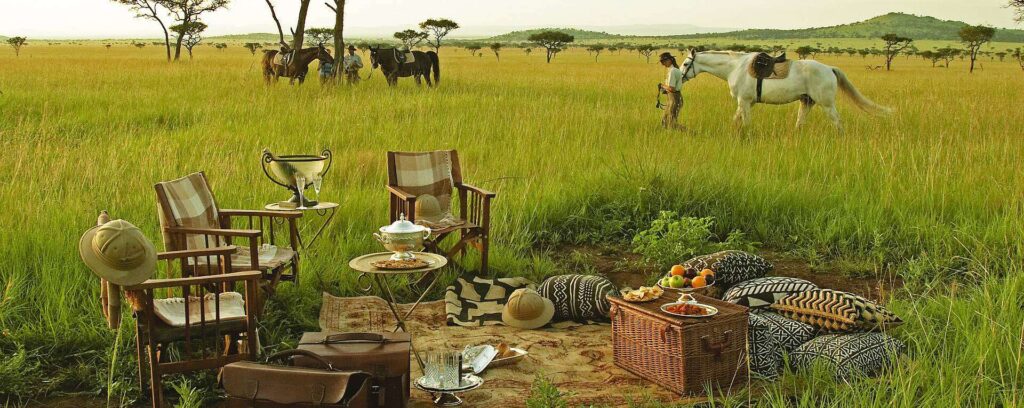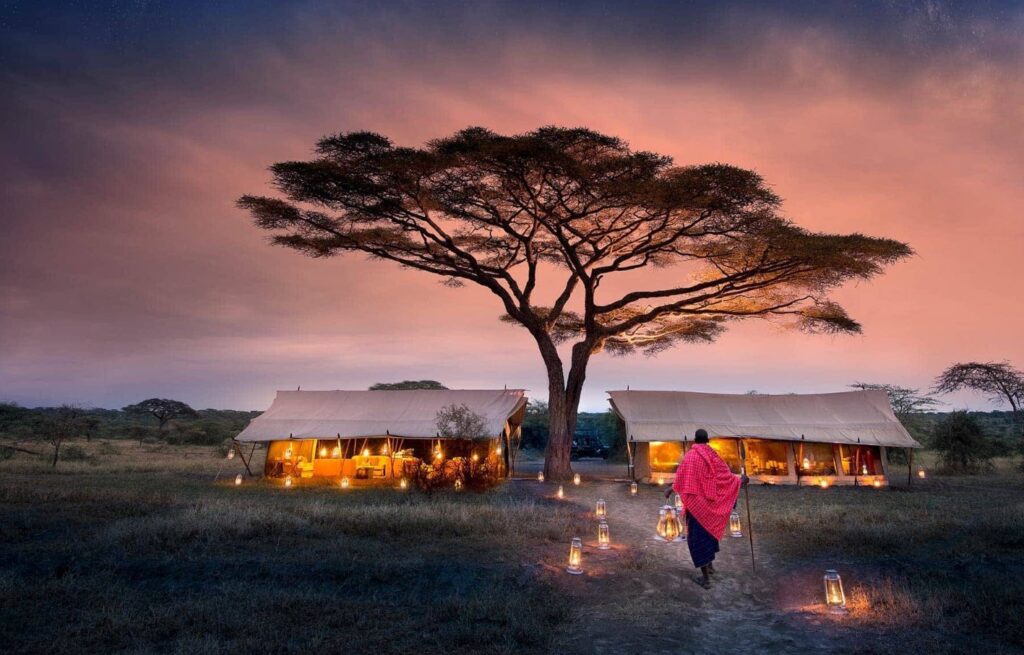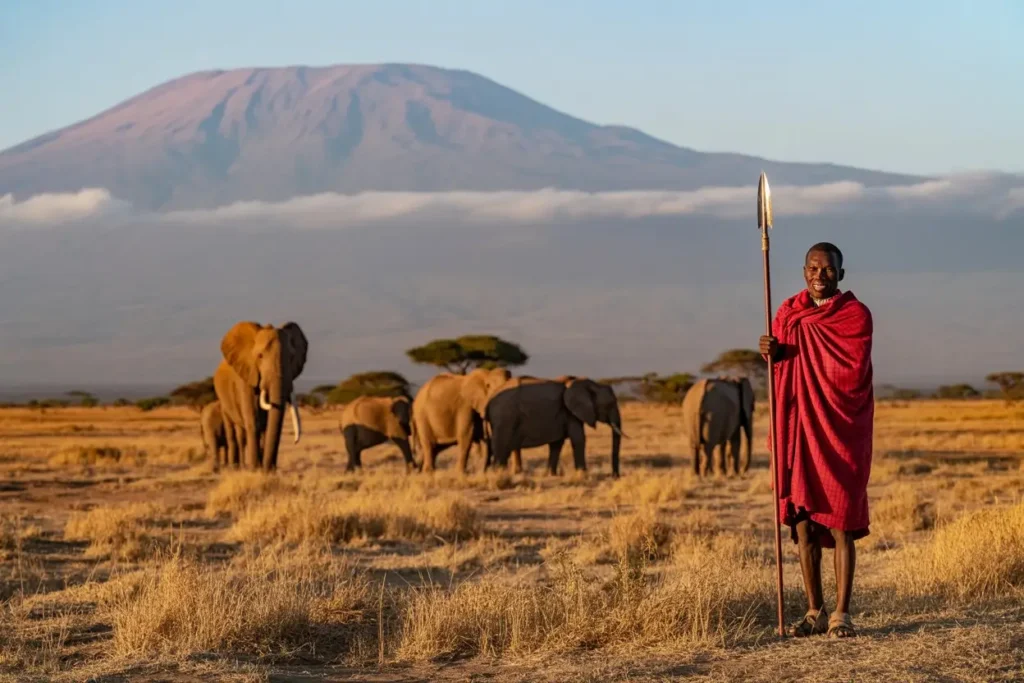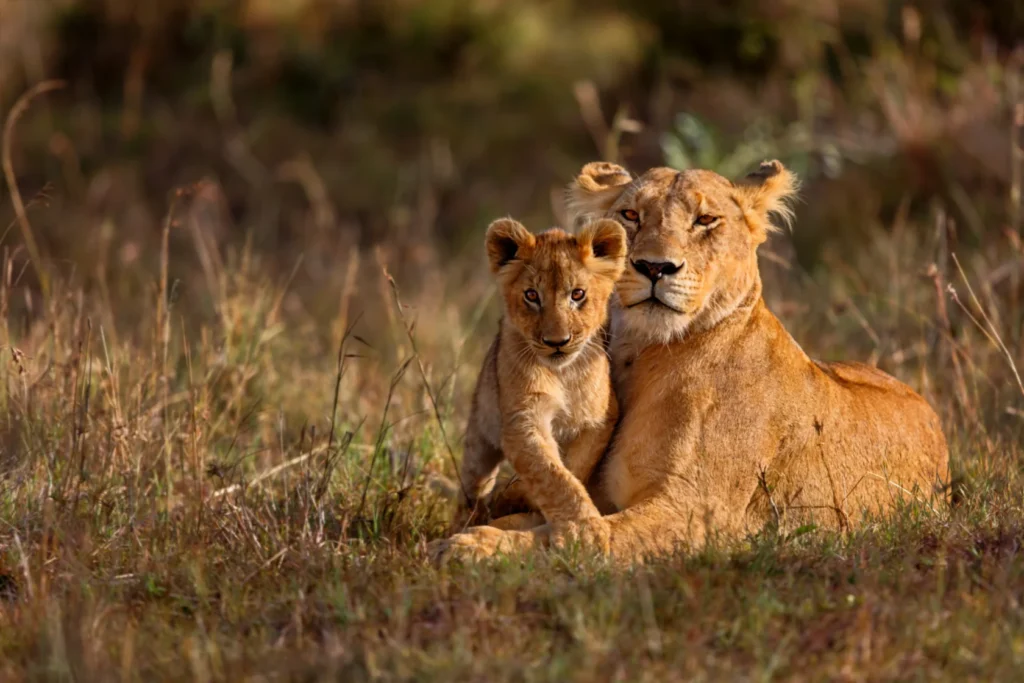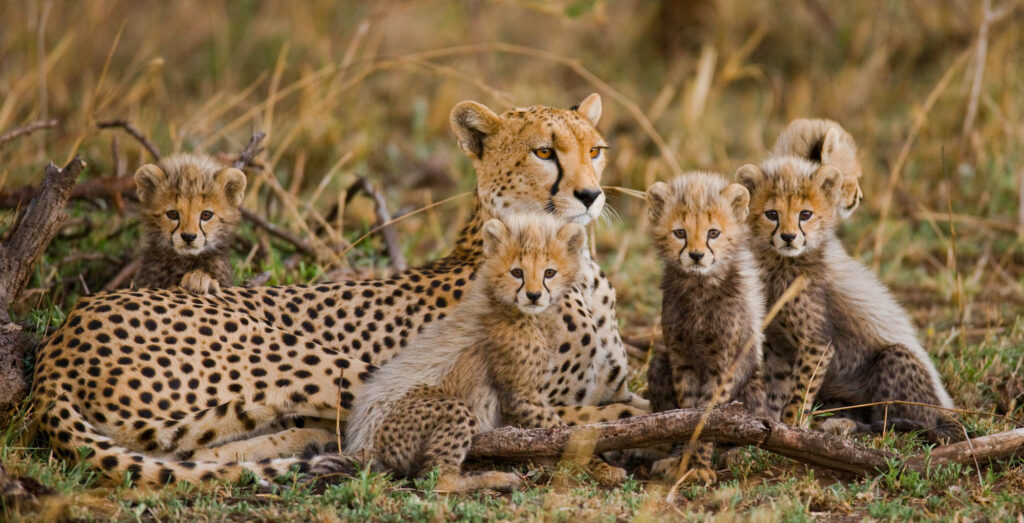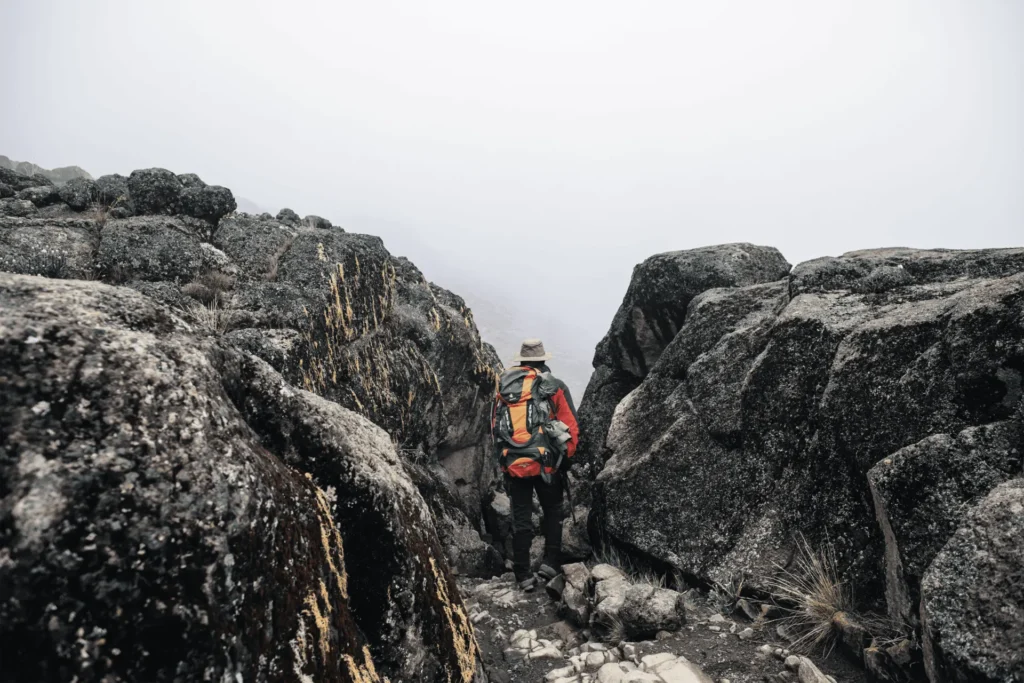
A family safari in Tanzania can be one of the most memorable adventures you take together. Imagine watching elephants crossing the savannah, seeing lions resting beneath an acacia tree, exploring the extraordinary landscapes of the Serengeti, and ending the day around a campfire beneath an African sky.
For families, however, planning a safari requires a little more thought than planning a trip for adults alone. Children have different energy levels, attention spans, food preferences, and comfort requirements. The best family safari is therefore not simply a standard safari with children added to the itinerary.
It should be designed around the entire family.
The good news is that Tanzania offers an incredible variety of safari experiences and accommodation options, making it possible to create an itinerary that works for parents, teenagers, and younger travellers alike.
From choosing the right parks and accommodation to planning shorter game drives and allowing enough time to relax, here is how to plan a family safari that everyone can enjoy.
## 1. Choose the Right Safari Destination
The first step is deciding where you want your family safari to take place.
Tanzania has several outstanding wildlife destinations, but you do not necessarily need to visit every park.
For a family trip, it is often better to select a few destinations and allow enough time to enjoy each one rather than spending most of the holiday travelling between parks.
Northern Tanzania is particularly popular for family safaris because several major attractions can be combined into one itinerary.
A classic route might include:
* Tarangire National Park
* Ngorongoro Conservation Area
* Serengeti National Park
Each destination provides a different experience.
Tarangire is known for elephants, baobab trees, and diverse wildlife. Ngorongoro offers spectacular scenery and concentrated wildlife viewing within the crater. The Serengeti provides vast open landscapes and opportunities to encounter some of Africa’s most famous animals.
The right combination depends on your family’s interests and the time available.
## 2. Consider Your Children’s Ages
The ideal safari itinerary can vary significantly depending on the age of your children.
Families travelling with teenagers may be comfortable with longer game drives, longer transfers, and more physically active experiences.
Families with younger children may prefer shorter drives, more frequent breaks, and accommodation with family-friendly facilities.
Before booking, discuss the itinerary with your safari operator and explain the ages of your children.
This allows the itinerary to be designed around your family’s actual needs rather than simply selecting a standard package.
### Travelling with teenagers
Teenagers can often enjoy a more adventurous safari experience.
Depending on the destination and regulations, you may be able to include activities such as walking experiences, cultural visits, photography activities, or other outdoor adventures.
Teenagers may also appreciate having some freedom during downtime at the lodge or camp.
### Travelling with younger children
Younger children may need a slower pace.
Long hours sitting in a safari vehicle can become tiring, especially if animals are not immediately visible.
Breaking up long game drives with meals, rest periods, and other activities can make the experience much more enjoyable.
## 3. Do Not Try to See Everything
One of the biggest mistakes families can make is trying to fit too much into one safari.
It can be tempting to visit as many parks as possible, especially when travelling a long distance to Tanzania.
But more destinations do not necessarily mean a better holiday.
Constantly packing, unpacking, driving, and changing accommodation can be tiring for children and adults alike.
Instead, choose a few key destinations and spend enough time in each one.
A slower itinerary allows the family to relax and gives you more time to appreciate the surroundings.
Remember that a safari is not a checklist.
You do not need to see every animal in Tanzania for the trip to be successful.
## 4. Build a Flexible Daily Schedule
Safari days often begin early because mornings can be excellent times for wildlife viewing.
However, children may not always appreciate waking up before sunrise every day.
This is why flexibility is important.
Rather than scheduling long game drives every morning and afternoon for an entire week, consider mixing full-day adventures with shorter activities and periods of relaxation.
For example, a family itinerary might include:
**Morning:** Game drive
**Midday:** Lunch and relaxation at the lodge
**Afternoon:** Shorter game drive or family activity
**Evening:** Dinner and relaxation
This creates a balance between adventure and downtime.
Children are more likely to enjoy the safari when they are not constantly exhausted.
## 5. Choose Family-Friendly Accommodation
Where you stay can have a major impact on your family safari experience.
Tanzania offers everything from traditional campsites to luxury lodges and tented camps.
When travelling with children, look for accommodation that offers appropriate family arrangements.
Depending on the property, this might include:
* Family rooms
* Connecting rooms
* Private family tents
* Swimming pools
* Child-friendly meals
* Babysitting services
* Family activities
* Spacious communal areas
Ask your safari operator about the accommodation before booking rather than assuming every lodge is suitable for children.
Some properties may have minimum age restrictions or specific rules regarding children.
## 6. Make the Safari Educational
A Tanzania safari can be much more than a wildlife holiday.
For children, it can become an extraordinary outdoor classroom.
Before travelling, introduce them to the animals they may see.
Learn about lions, elephants, giraffes, zebras, cheetahs, hippos, and other species together.
You can even create a simple wildlife checklist for the trip.
Encourage children to observe animal behaviour rather than simply asking whether they have seen a particular animal.
Why are elephants gathering near water?
Why do zebras and wildebeest travel together?
How do predators hunt?
What happens to the ecosystem when rainfall changes?
These questions can turn a game drive into an educational experience.
## 7. Teach Children How to Behave Around Wildlife
One of the most important parts of a family safari is teaching children that wild animals must be respected.
Animals in national parks are not domesticated.
Children should understand that they must remain quiet when approaching wildlife, follow the guide’s instructions, and never attempt to feed or approach animals.
They should also remain inside the safari vehicle unless their guide specifically says it is safe to leave.
Safari guides are trained to understand animal behaviour and should always have the final say regarding safety.
This is an excellent opportunity to teach children about wildlife conservation and responsible tourism.
## 8. Prepare for the Weather
Tanzania can experience significant differences in temperature between morning, afternoon, and evening.
Early mornings can be cool, while afternoons may become hot.
The best approach is to dress in layers.
Pack lightweight clothing that can be added or removed depending on the conditions.
Useful items for children include:
* Lightweight trousers
* Comfortable shirts
* Warm layers for early mornings
* Sun hats
* Sunglasses
* Comfortable walking shoes
* Lightweight rain jackets
* Sunscreen
* Insect repellent
The CDC recommends appropriate protection against sun exposure and insects when travelling in Tanzania. It is also advisable to discuss destination-specific health precautions with a healthcare professional before travelling. ([wwwnc.cdc.gov](https://wwwnc.cdc.gov/travel/destinations/traveler/destinations/tanzania?utm_source=chatgpt.com))
## 9. Think Carefully About Food
Children can sometimes be more selective about food than adults.
When booking your safari, let your accommodation and safari operator know about your children’s food preferences or dietary requirements.
Most quality safari lodges and camps can accommodate common dietary needs when informed in advance.
It is also useful to carry familiar snacks for longer game drives.
Good options can include:
* Crackers
* Dried fruit
* Granola or energy bars
* Nuts, where appropriate
* Biscuits
* Other familiar packaged snacks
Always follow local food and water safety recommendations during your trip.
## 10. Keep Children Comfortable During Game Drives
Game drives can be exciting, but they can also involve long periods of sitting.
Comfort becomes particularly important for younger travellers.
Bring small items that can keep children occupied during quieter moments.
A camera or binoculars can give children something to focus on.
You can also encourage them to keep a safari journal where they record animals they see, interesting observations, drawings, or questions for the guide.
Instead of asking only, “Did you see a lion?” encourage children to notice details.
What colour was it?
What was it doing?
Was it alone or with other lions?
This makes the experience interactive.
## 11. Choose the Right Safari Vehicle
The vehicle itself can influence the comfort of your family.
A private safari vehicle can be particularly useful for families because it provides more flexibility.
You can stop when appropriate, adjust the pace of the day, and spend more time observing something that interests your children.
If someone becomes tired, the itinerary can sometimes be adjusted more easily than it would be with a shared group.
Private safaris can cost more, but the additional flexibility can be especially valuable for families.
## 12. Consider Health and Travel Preparation
Before travelling to Tanzania, parents should review the health requirements and recommendations relevant to their family.
The CDC advises travellers to Tanzania to consult a healthcare professional before travelling to discuss vaccinations, medications, and other destination-specific health considerations. ([wwwnc.cdc.gov](https://wwwnc.cdc.gov/travel/destinations/traveler/destinations/tanzania?utm_source=chatgpt.com))
Families should also consider travel insurance that provides appropriate medical coverage.
If a child takes regular medication, bring enough for the trip and keep it accessible.
It is also sensible to carry basic personal health items and any medications your family normally relies on.
Do not wait until the last few days before departure to address important health questions.
## 13. Add a Cultural Experience
A family safari becomes even more meaningful when children have the opportunity to learn about Tanzanian culture.
Depending on your itinerary, you may be able to visit a local community, meet artisans, learn about traditional practices, or participate in an appropriate cultural experience.
These activities can help children understand that Tanzania is not simply a place filled with wild animals.
It is a country with diverse communities, languages, traditions, histories, and cultures.
Choose experiences that are respectful and community-focused rather than treating local people simply as tourist attractions.
## 14. Consider Adding Zanzibar
After several days of safari, a few days on the beach can be the perfect way for a family to relax.
Zanzibar offers beautiful beaches, warm Indian Ocean waters, historic Stone Town, and a variety of family-friendly activities.
A safari-and-beach combination can provide the perfect balance.
Start your trip with adventure in the wilderness, then finish with several days of swimming, relaxing, exploring, and enjoying the coast.
For children, the change of environment can also be refreshing after several days of game drives.
## 15. Teach Children to Appreciate the Journey
One of the best things parents can do is avoid making the safari solely about seeing the Big Five.
Wildlife is unpredictable.
You might spend an hour searching for a lion and find nothing, then suddenly encounter elephants, giraffes, zebras, or a spectacular bird display.
The unpredictability is part of the adventure.
Teach children that the African wilderness does not operate on a schedule.
Sometimes the most memorable moment will not be the animal you expected to see.
It might be watching the sunrise over the Serengeti, hearing birds around camp, seeing a herd of elephants crossing the road, or learning something fascinating from your guide.
## Sample Family Tanzania Safari Itinerary
A family-friendly northern Tanzania itinerary could look something like this:
### Day 1: Arrival in Tanzania
Arrive in Tanzania, meet your representative, and transfer to your accommodation.
Keep the first day relaxed after international travel.
### Day 2: Tarangire National Park
Enjoy a morning and afternoon game drive in Tarangire, looking for elephants, giraffes, zebras, and other wildlife.
Return to your lodge for dinner and relaxation.
### Day 3: Ngorongoro Conservation Area
Travel toward Ngorongoro and enjoy the dramatic landscapes surrounding the crater.
Depending on your schedule, you can enjoy a game drive or another suitable activity.
### Day 4: Ngorongoro Crater
Descend into the crater for an exciting wildlife experience before continuing toward the Serengeti.
### Days 5–6: Serengeti National Park
Spend two days exploring the Serengeti.
The flexible schedule allows your family to enjoy wildlife encounters without rushing.
### Day 7: Return or Continue to Zanzibar
Depending on your flight schedule, return toward Arusha or continue to Zanzibar for several days of relaxation.
The exact itinerary should always be adjusted according to your family’s ages, interests, travel dates, budget, and preferred pace.
## What Makes a Family Safari Successful?
The perfect family safari is not necessarily the most luxurious or expensive safari.
It is the safari where everyone has enough time to enjoy themselves.
Parents should have opportunities to relax.
Children should have opportunities to explore and learn.
The itinerary should provide adventure without becoming exhausting.
And everyone should feel safe and comfortable.
Good planning makes this possible.
## Final Thoughts: Creating Family Memories in Tanzania
A family safari in Tanzania can introduce children to some of the world’s most remarkable wildlife and landscapes while creating memories that stay with the entire family for years.
The key is to design the safari around your family rather than trying to fit your family into a standard itinerary.
Choose the right destinations, consider your children’s ages, avoid an overly rushed schedule, select appropriate accommodation, plan flexible game drives, and make the experience educational and interactive.
Give everyone time to rest and remember that wildlife sightings cannot be guaranteed or scheduled.
Most importantly, let your children experience the wonder of Africa at their own pace.
Years from now, they may not remember every lodge you stayed in or every kilometre you travelled.
They are much more likely to remember the moment they saw their first elephant, watched a lion in the wild, looked across the endless Serengeti plains, or sat with their family beneath an African sunset.
That is what makes a Tanzania family safari more than a holiday.
**It becomes a shared adventure—and a memory the whole family can carry for a lifetime.**