A safari in Tanzania is an opportunity to experience wildlife in a way that no zoo or wildlife documentary can truly replicate. Instead of viewing animals behind fences, you travel through vast natural landscapes where lions rest beneath trees, elephants move across open plains, giraffes browse among acacias, and cheetahs scan the grasslands for their next opportunity.
Tanzania is one of Africa’s most celebrated safari destinations, with extraordinary wildlife habitats spread across destinations such as the Serengeti National Park, Ngorongoro Conservation Area, Tarangire National Park and Nyerere National Park. The country’s official tourism information highlights the Serengeti for its vast plains and extraordinary wildlife spectacles, while Ngorongoro is particularly renowned for its concentration of wildlife.
While Tanzania is home to an enormous variety of animals, there are five species that consistently capture the imagination of safari travellers.
From powerful predators to enormous herbivores, these animals represent some of the most unforgettable encounters you can experience in the African wilderness.
## 1. The African Lion
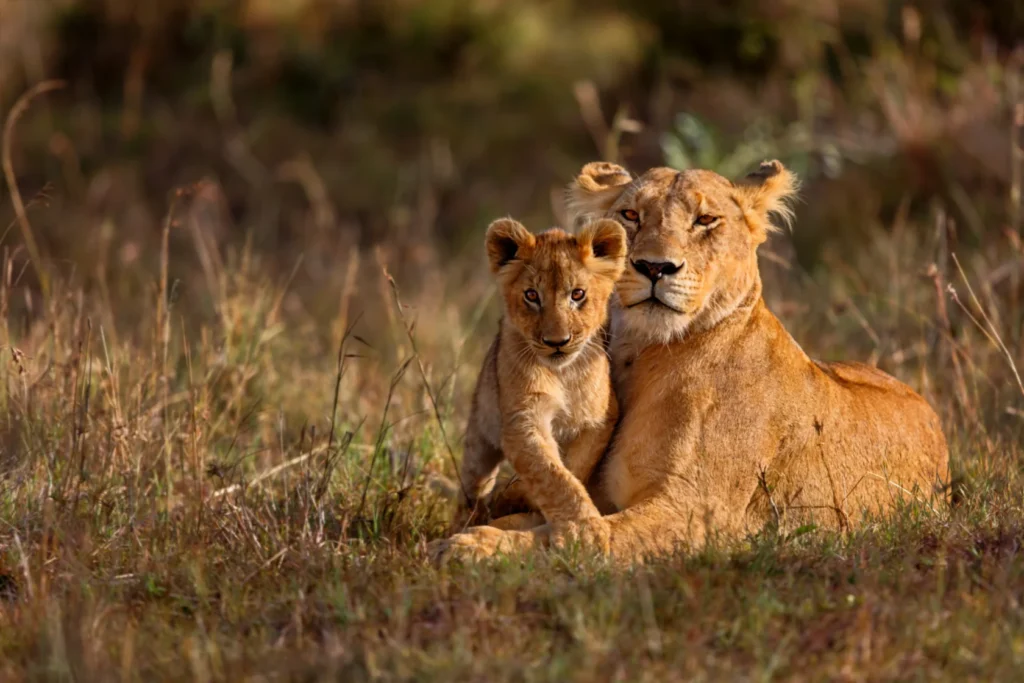
Few animals represent the African wilderness quite like the lion.
Powerful, social, and instantly recognizable, lions are among the most exciting animals to encounter during a Tanzania safari.
The Serengeti is particularly famous for its lions, and the species can also be found in other Tanzanian wildlife areas. The Ngorongoro Conservation Area identifies lions among its major wildlife species and notes that they can be found in grassland habitats where their distribution is influenced by the availability of prey.
### Why lions are so fascinating
Unlike many solitary big cats, lions are highly social animals.
They often live in groups known as prides, creating opportunities to observe different forms of behaviour.
You may see lions:
* Resting beneath a tree
* Grooming one another
* Playing
* Watching their surroundings
* Moving through grassland
* Caring for young cubs
* Interacting with members of their pride
One of the most memorable experiences is watching a pride during the early morning.
The light is often soft, temperatures are cooler, and lions may still be relatively active after the night.
As the day becomes hotter, they frequently spend long periods resting.
### Where to see lions in Tanzania
The Serengeti is one of the country’s major destinations for lion viewing.
Ngorongoro is another excellent area, with wildlife concentrated within the crater’s remarkable ecosystem. Tanzania’s official tourism website describes Ngorongoro as one of Africa’s outstanding places to see the Big Five in a relatively concentrated landscape.
A lion sighting is never guaranteed because these are wild animals, but Tanzania’s diverse ecosystems provide excellent opportunities to encounter them.
—
# 2. The African Elephant
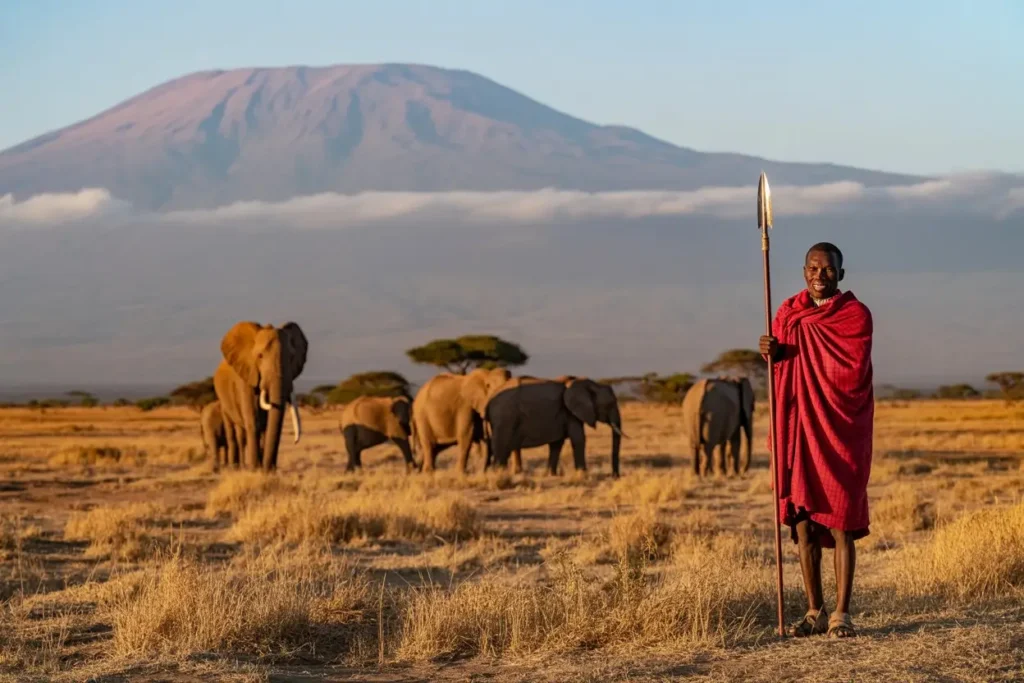
Few wildlife encounters can prepare you for seeing an African elephant in the wild.
Their enormous size is impressive, but watching elephants behave naturally is even more fascinating.
A family group slowly moving across the savannah can be an unforgettable sight.
You may see elephants feeding, drinking, communicating, playing, or interacting with younger members of the herd.
### Why elephants are special
Elephants are highly social animals, and family groups can provide some of the most interesting wildlife encounters on safari.
Young elephants are particularly entertaining to watch.
They may remain close to adults while learning how to navigate their environment.
Older members of the herd play important roles in guiding and protecting younger elephants.
For photographers, elephants also offer extraordinary opportunities because of their size and distinctive appearance.
A single elephant can make an impressive portrait, while a herd crossing an open plain can create a spectacular landscape photograph.
### Where to see elephants in Tanzania
Tarangire National Park is particularly well known for elephants.
The park’s official Tanzania National Parks information describes its wildlife as including elephants, lions, buffalo, zebra, giraffe, hippos and other species across its savannah and seasonal landscapes.
The Serengeti and Ngorongoro ecosystem can also provide opportunities to encounter elephants.
In southern Tanzania, Nyerere National Park is another important destination. Its wildlife includes large elephant populations associated with the Rufiji River system and surrounding habitats.
### The unforgettable moment
One of the most memorable elephant encounters is watching a herd cross the road in front of your safari vehicle.
Rather than rushing past them, a good guide may allow you to sit quietly and observe.
You might see adults leading the group while younger elephants remain close to their mothers.
These quiet encounters often become some of the strongest memories of a Tanzania safari.
—
# 3. The African Leopard
The leopard is one of Africa’s most beautiful and elusive predators.
While lions often live in groups and cheetahs can be seen hunting across open plains, leopards are typically more difficult to spot.
That makes a leopard sighting particularly exciting.
The Serengeti is known for its diverse predator population, including lions, leopards and cheetahs.
### Why leopards are difficult to find
Leopards are masters of concealment.
Their spotted coats can blend remarkably well with vegetation, rocks, and shadows.
They are also comfortable resting in trees, which can make them surprisingly difficult to notice.
A skilled safari guide can make a huge difference.
Guides spend considerable time in the wilderness and develop an understanding of where animals are frequently found and how to recognize signs of their presence.
Sometimes your guide may suddenly stop the vehicle and point toward what appears to be an ordinary tree.
Then you notice the shape of a leopard resting among the branches.
### Look carefully
One of the best lessons on safari is learning to look beyond the obvious.
Do not only search the open plains.
Look into trees.
Check shaded areas.
Watch rocky outcrops.
Observe the behaviour of other animals.
Sometimes birds or smaller animals can indirectly reveal the presence of a predator.
### A leopard in a tree
A leopard resting on a branch overlooking the Serengeti is one of the classic African safari scenes.
The elevated position allows the animal to rest while keeping an eye on its surroundings.
For photographers, this can also create beautiful compositions against the sky or surrounding landscape.
But the real reward is simply seeing this elusive predator in its natural environment.
A leopard sighting can turn an ordinary game drive into an unforgettable one.
—
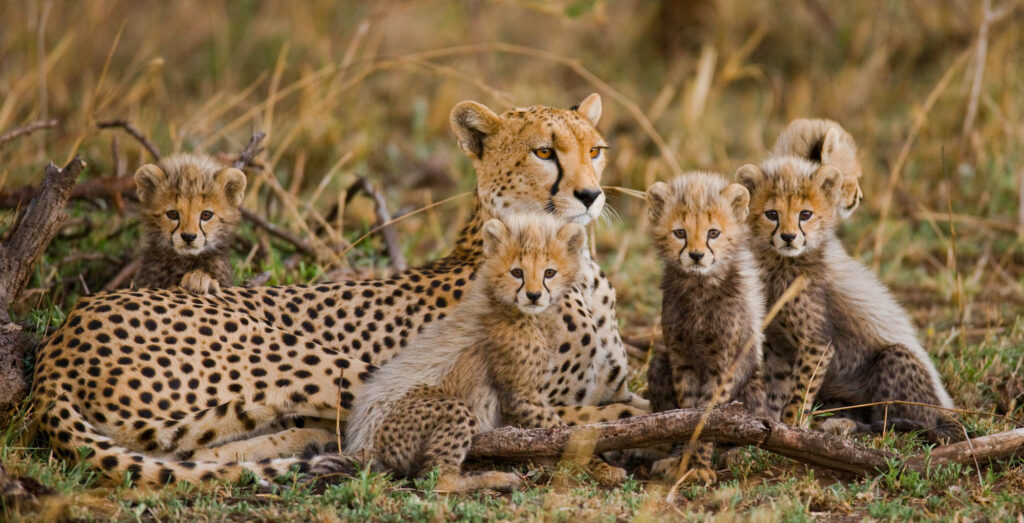
# 4. The Cheetah
If the leopard represents stealth and the lion represents power, the cheetah is famous for speed.
The cheetah is one of Tanzania’s most fascinating predators, particularly because of its adaptations for pursuing prey across open landscapes.
The Serengeti is one of the places where travellers can encounter cheetahs, and Tanzania’s Ngorongoro Conservation Area also lists cheetahs among its large carnivores.
### What makes cheetahs different?
Cheetahs have a distinctive body shape designed for speed.
They are built differently from lions and leopards, with a lightweight frame, long legs, and other adaptations that help them move rapidly.
Their spotted coat also provides excellent camouflage among the grasslands.
### Watching a cheetah hunt
A cheetah sighting does not necessarily mean you will witness a high-speed chase.
Wildlife behaviour is unpredictable.
You might find a cheetah resting beneath a bush, sitting on a small rise, scanning the plains, or moving slowly through the grass.
That is part of the excitement.
You never know what will happen next.
If a cheetah does begin moving toward potential prey, the atmosphere inside the safari vehicle can change instantly.
Everyone becomes quiet.
The guide watches carefully.
The animal begins to move.
And then, sometimes, the action happens incredibly quickly.
These moments are rare and should never be expected or forced.
### Where to see cheetahs
The Serengeti’s open grasslands are particularly well suited to cheetahs.
The Ngorongoro ecosystem also supports cheetahs among its diverse carnivore populations.
For travellers interested in predators, including cheetah sightings in a northern Tanzania itinerary can be highly rewarding.
—
# 5. The Giraffe
The giraffe may not be one of the traditional “Big Five,” but it absolutely deserves a place among the animals you should look for on a Tanzania safari.
With their extraordinary height, long necks, distinctive patterns, and graceful movements, giraffes are among Africa’s most recognizable animals.
They are also surprisingly beautiful to photograph.
### Why giraffes are unforgettable
A giraffe standing alone against the horizon can create a spectacular image.
A group moving through golden grass can look almost surreal.
And seeing a giraffe walking alongside a safari vehicle gives you a completely different appreciation for its enormous size.
Giraffes are herbivores and spend much of their time feeding on vegetation.
Watching one carefully reach into the branches of a tree to feed is a fascinating example of how animals have adapted to their environment.
### Giraffes and the African landscape
Giraffes are particularly photogenic because of their relationship with the landscape.
Instead of photographing only the animal, try including the surrounding environment.
A giraffe beneath an acacia tree can immediately communicate the feeling of an African safari.
During sunrise or sunset, the animal’s silhouette can become especially striking.
### Where to see giraffes
Giraffes occur in several Tanzanian wildlife areas.
The Ngorongoro Conservation Area lists giraffes among the herbivores found in the wider conservation landscape, while Tanzania’s national parks offer opportunities to encounter them in different habitats.
Tarangire, Serengeti, and other safari destinations can all provide opportunities to see these remarkable animals.
—
# Beyond the Big Five: Tanzania Has Much More to Discover
Although lions, elephants, leopards, cheetahs, and giraffes are among the most sought-after animals, they represent only a small part of Tanzania’s extraordinary biodiversity.
A safari can also introduce you to:
* Zebras
* Wildebeest
* Hippos
* Buffalo
* Hyenas
* Wild dogs
* Gazelles
* Antelopes
* Monkeys
* Baboons
* Crocodiles
* Hundreds of bird species
The Ngorongoro Conservation Area, for example, lists a wide range of mammals including wildebeest, zebras, antelopes, giraffes, hippos, primates, large carnivores, and the Big Five.
Nyerere National Park provides an entirely different wildlife experience, with African wild dogs, elephants, hippos, crocodiles, lions, leopards, giraffes, buffalo, and extensive birdlife associated with the Rufiji River and surrounding habitats.
This variety is one of the reasons a Tanzania safari can feel different every day.
—
# The Importance of a Good Safari Guide
Your safari experience is not only about where you go.
It is also about who takes you there.
A knowledgeable guide can help you understand animal behaviour, identify species, interpret tracks, locate wildlife, and understand the ecosystems around you.
You may look across a grassland and see nothing.
Your guide may notice a small movement hundreds of metres away.
Suddenly, binoculars come out and you realize there is a lion resting in the grass.
Guides can also help ensure that wildlife encounters are conducted responsibly.
Animals should never be chased, harassed, or deliberately disturbed simply to obtain a photograph.
The objective is to observe wildlife behaving naturally.
—
# How to Make the Most of Your Wildlife Encounters
Seeing wildlife is exciting, but patience is one of the most important qualities you can bring on safari.
Do not expect every animal to perform for you.
Sometimes you may spend time watching an animal that appears to be doing nothing.
But that quiet moment can change quickly.
A lion may stand.
A herd of elephants may begin moving.
A giraffe may walk across the road.
A leopard may climb into a tree.
A cheetah may suddenly become alert.
Wildlife is unpredictable, and that is precisely what makes a safari different from visiting a zoo.
Bring binoculars if possible, keep your camera ready, listen to your guide, and take time to observe the entire environment rather than focusing only on the most famous animals.
—
# Plan Your Safari Around the Wildlife You Want to See
Different parks and ecosystems offer different wildlife experiences.
If big cats are your priority, the Serengeti should be high on your list.
If elephants are particularly important to you, Tarangire can be an excellent destination.
If you want to experience a concentrated wildlife environment, Ngorongoro offers a remarkable setting.
If you are interested in a more remote experience with opportunities to see wild dogs, elephants, hippos, and riverine wildlife, Nyerere can provide a very different safari experience.
The best itinerary depends on your interests, travel dates, budget, and the amount of time you have available.
—
# Final Thoughts
A Tanzania safari is ultimately about much more than checking animals off a list.
Yes, seeing a lion for the first time is unforgettable.
Seeing a herd of elephants move across the savannah can be extraordinary.
Finding a leopard hidden in a tree can feel like discovering a secret.
Watching a cheetah scan the plains can leave you completely captivated.
And seeing a giraffe standing against the African horizon can make you stop and simply take in the moment.
But the real magic comes from seeing these animals where they belong—in vast, protected landscapes where they can live and behave naturally.
Tanzania provides an extraordinary setting for these encounters. From the endless plains of the Serengeti to the dramatic Ngorongoro landscape and the diverse ecosystems of the country’s southern parks, there is always something new to discover.
So, when you begin planning your safari, make your list.
**Lion. Elephant. Leopard. Cheetah. Giraffe.**
Then leave room for surprises.
Because the animal you did not expect to see may eventually become the one you remember most.